
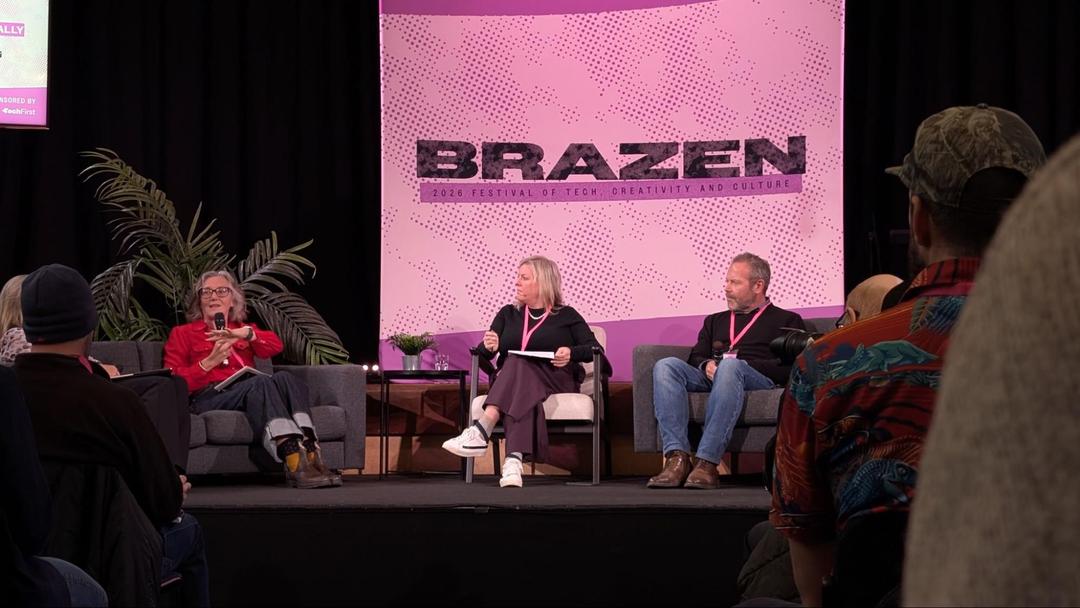
I’ve always been a pretty one-dimensional person. I’ve been a software engineer for more than 10 years. I studied software engineering at university, and it was my dream job as a child. I never had a part-time job, no summer job; I never worked in retail; I have always been one thing. Whether I’ve been good at it is up to others, but in recent months it's become clear to me that it’s no longer enough! I can no longer just rely on my skills and experience. I need more skills; I need more knowledge, experience, perspectives. I need more dimensions!
That’s why I decided to attend this year’s Brazen festival in Bristol. It seemed like a great idea for me to broaden my horizon and see people from different fields and sectors. In this article, I go over my experience at Brazen, what I liked about it and what I learned.
What is Brazen?
Brazen is a city-wide technology, creativity and culture festival, based in Bristol, powered by techSPARK. In previous years, this festival used to be called “Bristol Technology Festival”, but it has now outgrown that name as it additionally focuses on creativity and culture in Bristol. Held in November (from 9th to 13th), the festival runs from Monday to Friday, with each day being focused on one specific theme. And we will go over them day by day.
Monday: Lead
I arrived in the city at around 12 PM. This was my first time in Bristol. It was noticeably colder than Bournemouth. I headed straight to the Station to get to the community events, where I saw a talk by Tabitha Aldrich-Smith from the Met Office on how they handle misinformation and keep the public’s trust. Followed by a panel with Katie Martin of Hidden Signals and Duniya Moore of Illumo Digital, two CEOs who shared their insights on management and what happens when you move up to running a business.
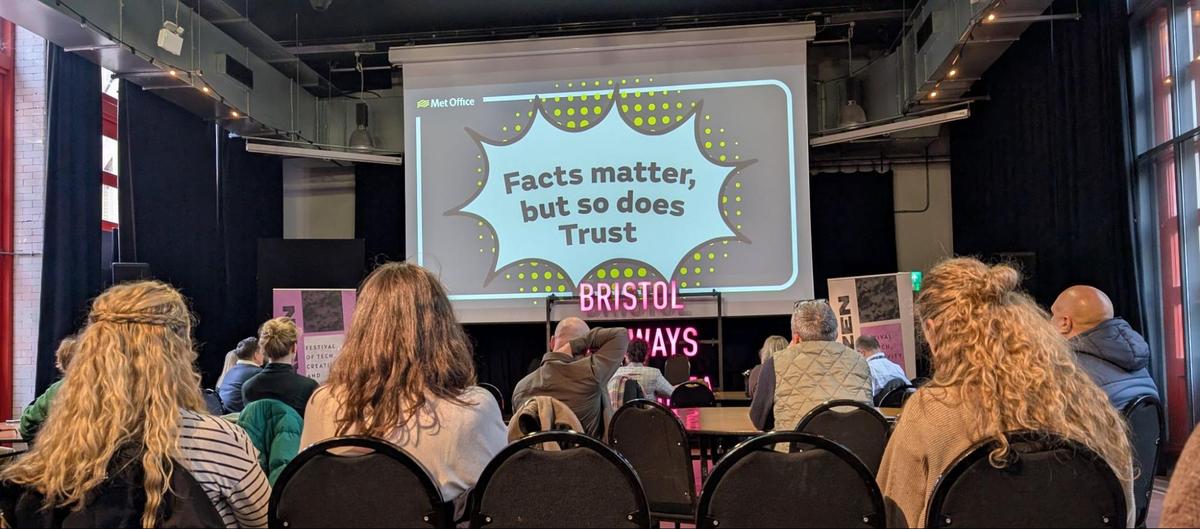
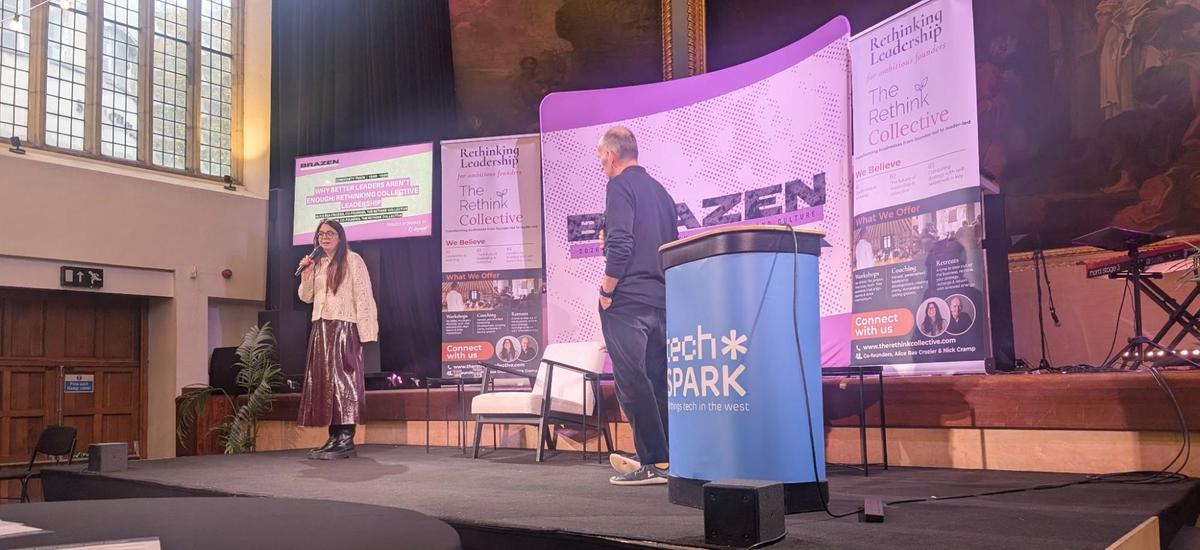
I then went to a workshop by Alice Bea Crozier and Nick Cramp from The Rethink Collective on modern leadership and 3 types of leadership. Me (Founder-led), We (Leader-led) and Us (Capability-led).
Before the festival, I had a goal of talking to at least 5 people during the whole week. 1 person for each day. Being social is not really my forte. What I like about this workshop is that they put us in groups and made us talk to each other, which meant that I literally reached my 5-person goal on the first day. I even talked into a microphone on behalf of our team for one of the questions, which was incredibly scary.
I learned that I was one of the few people working in a capability-led company, which is kinda ironic considering we are literally being led by our founders, but I still consider Cube to be an "Us" company as everybody contributes to the company’s processes and culture.
They also talked about something that Duncan (Our CEO) has been saying for a couple of years. About how we should reframe how the business is run. How we should go from avoiding risks to taking calculated risks; going from looking for certainty to getting comfortable with being uncomfortable. “Not taking a risk in these times might be the riskiest thing we do”
It was a great first day of the festival for me, and I was really eased into it.
Tuesday: AI
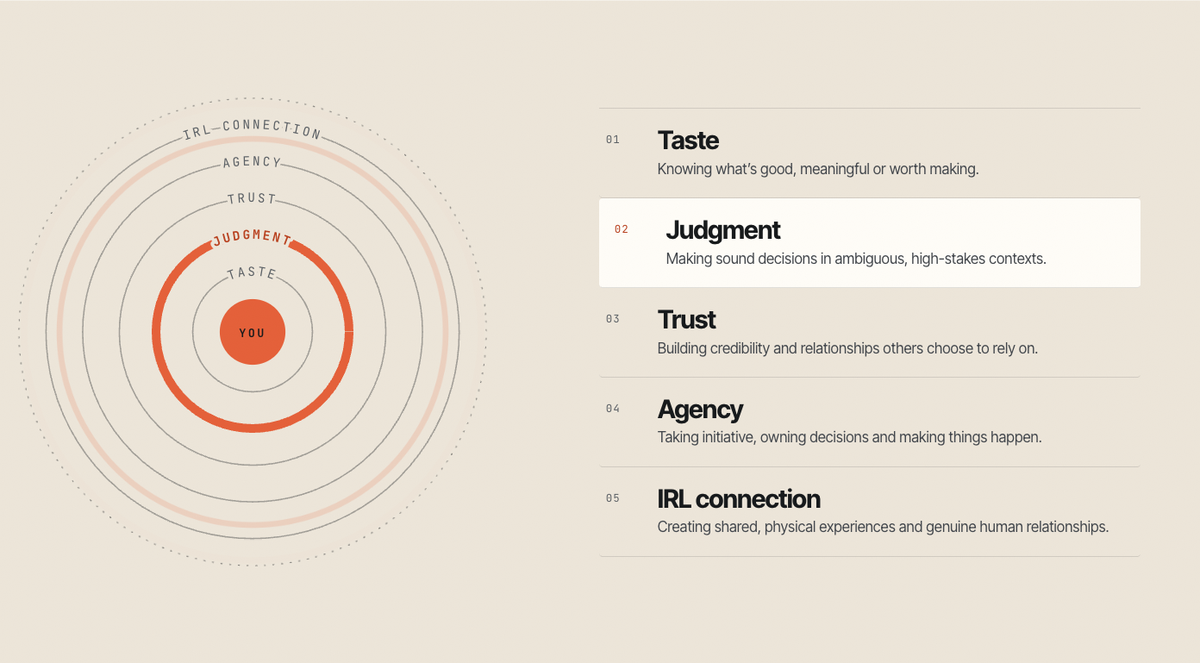
This was the most important day for me, so I had the summit ticket for it. I headed straight to the St. Nicholas Church and found an aisle seat. The first thing that interested me was seeing a woman named Tilly Lockey wearing two bionic arms. But more about her on Thursday. The Keynote speaker, Dr Daniel Duma, talked about the last job on Earth after AI has replaced us all. He talked about the 5 “human moats” which separate humans and AI.
As Daniel put it “when capable AI systems can produce answers, designs, plans and software cheaply, producing competent output is no longer enough to stand apart”. There is real uncertainty, there is real fear and worry, but there is also a lot of opportunity to stand out and rise above.
This was followed by an interesting panel of Caelum Rosenkranz of Google, Paul Griffiths of Microsoft, Emily Armstrong of AER Studios and Joel Gibbard of Open Bionics to talk about one important topic: What’s happening to the junior software engineer role.
While the consensus was that the role of a junior software engineer no longer exists as it used to, there were talks of a brand new role description. The skills required of a junior software engineer are no longer just a specific tech or a programming language, but what Emily called “Power skills”. What is required now is the ability to work with others, collaborate and communicate effectively, problem-solving, and a general ability to work in this AI-led environment.
In fact, the youth actually have a new advantage now. They now have a whole set of tools and services to do whatever they want without being limited to a tech or a specific problem or field. Our dream job was never to code, but to build. Coding was always the challenging and difficult thing we had to do in order to achieve our goals. The challenge of a junior software engineer is no longer whether they can do something or not. It is: now that you can, what are you going to do?
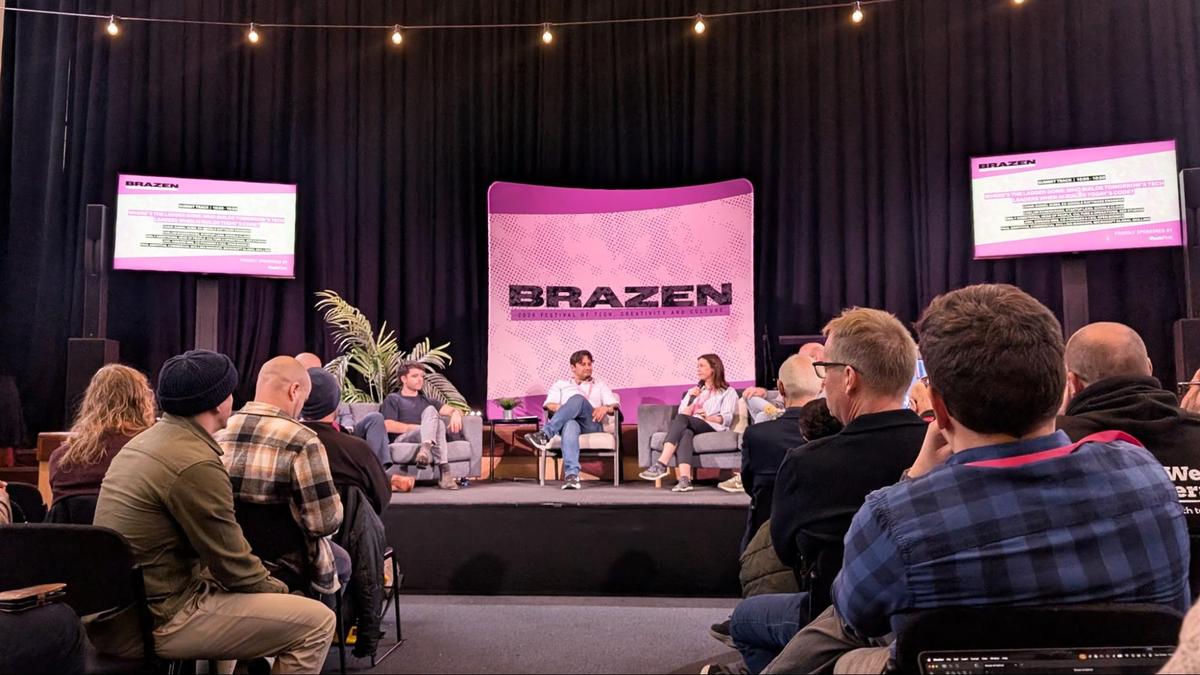
In the next panel, Kirstine Dale of Met Office, Su Crighton of KPMG, Justin Nesbitt of nLighten and Ed Rimmell of VWV talked about how they were using AI in their companies and processes, which was interesting to hear. It’s crazy to know that your company is ahead of a lot of others in terms of AI, but still know it’s so competitive out there that somehow it still feels like you need to be further ahead.
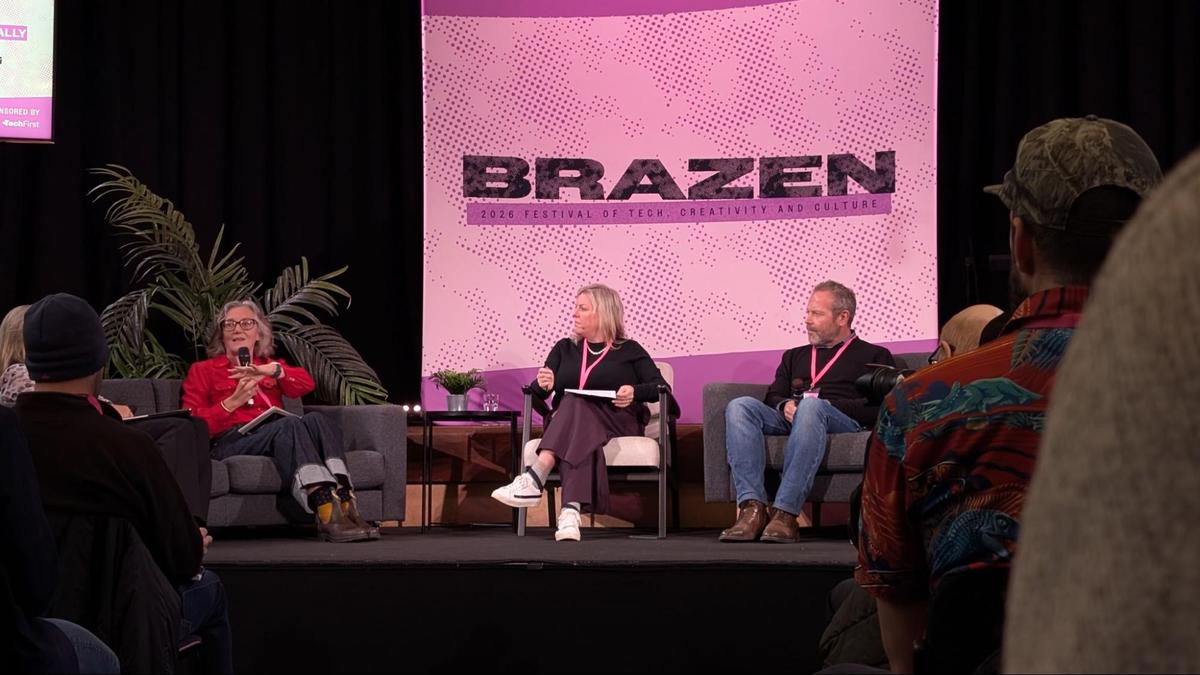
And for the final summit talk of the day, Dame Dawn Childs was interviewed about nLighten and the UK’s data infrastructure. nLighten is a data centre operator that builds and operates infrastructures for data servers.
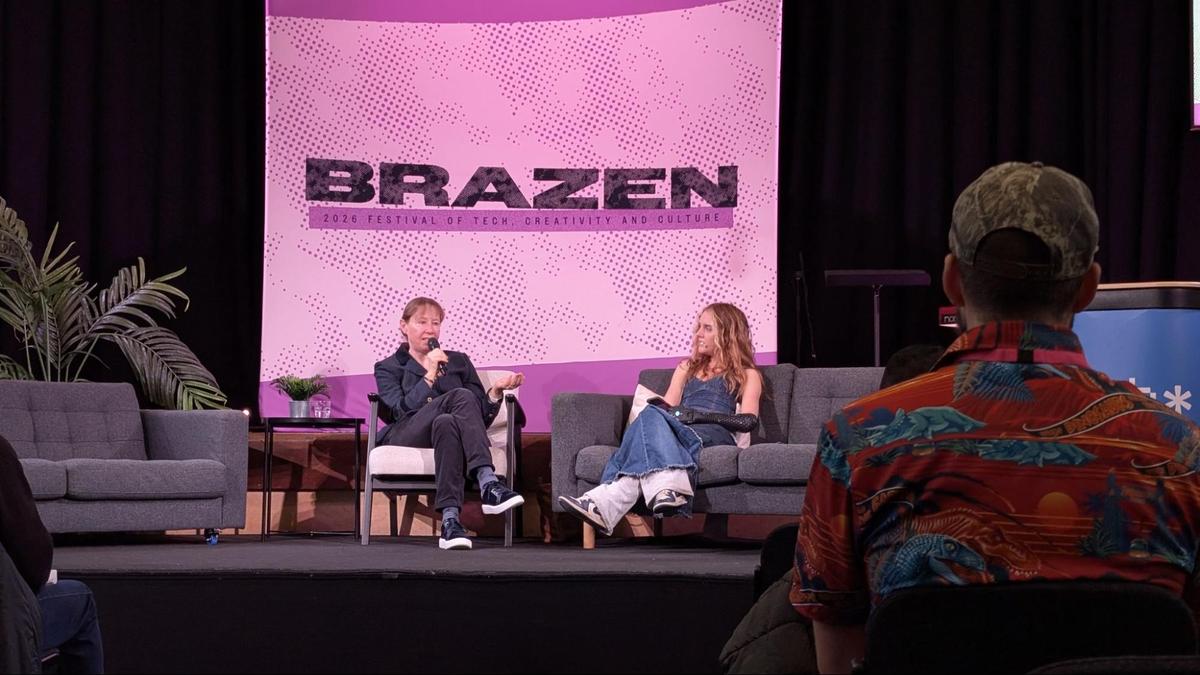
The afternoon community talks took an interesting turn as they mostly talked about AI in the art community. How to use AI ethically and legally in the arts and whether or not an artist has the right to use AI.
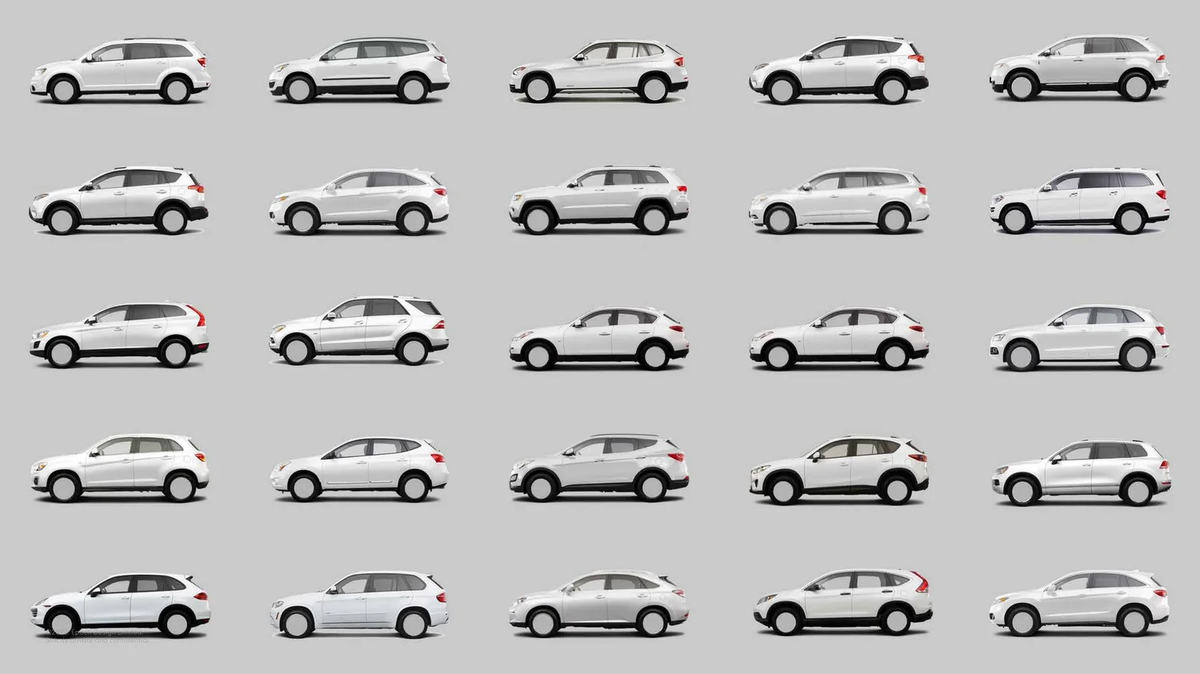
Alex Murrell of Epoch had a very interesting 10-minute talk on the concept of homogenization, or what he called “blanding”, on how every brand is starting to look the same
His message was that in this “age of average” there’s real opportunity to stand out. You can read his essay here.
Break: Exploring Bristol
I didn’t have the summit ticket for Wednesday and Thursday, so I mostly just went to the festival in the afternoon and instead spent the morning walking around Bristol.
Wednesday: Clean
Wednesday was all about the environment and clean energy and technologies. Ammar Jamali and Lauren Gillis of Future Leap talked about Carbon footprints and neutrality and all of its terms and meanings.
Louise Whitaker of Virgin Media O2 and Onnee Kaneen of Terraguard talked about unused devices in your drawers and how recycling them can help close the device gap in the UK. Based on their data, there are about 460 million unused devices in the UK, while there are only 1.5 million people without one. They encouraged people and companies to recycle or even resell their unused devices to help include everyone in the digital world.
Dr James M. Courtney and Henry Apsey of Hyppo Hydrogen Solutions talked about Hydrogen technology and energy and how we can start replacing carbon fuels. I attended Bristol’s BID event about how to better use the empty, outdated and unused spaces in Bristol. I had never been to a BID meeting before in Bournemouth or Poole, so it was interesting to see what they do about their city.
Thursday: Scale
I almost didn’t go to any talks on Thursday as I had no plans for it. But it was at around 9 AM that I looked up some events that were still open and managed to get tickets. So I went to the Tech4Good South West talk about the connection project and digital inclusivity. And I am so happy to have gone to this, as it gave me a lot of insights on accessibility and inclusion.
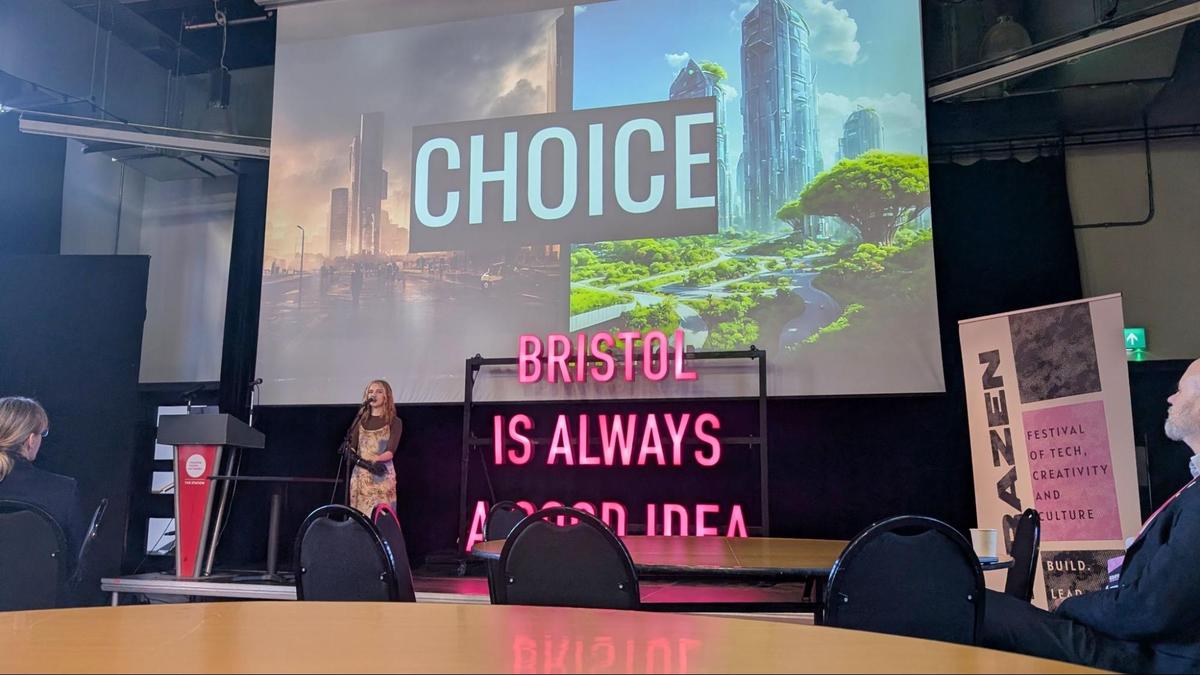
I went to Tilly Lockey’s talk about her bionic arms. She talked a little about her challenges and more about how she helped improve the bionic technologies by working with Open Bionics since she was around 10. She talked about how realistic-looking arms aren’t always the right idea and how trying to hide the problem isn’t a good solution. She also talked about the importance of asking users what they want, rather than building what you think they might want. And how our future isn't decided by AI, but our choice on how we use AI! I recommend everyone to look her up as she’s a genuinely impressive person.
Friday: Create
Friday was a personal one for me. Those who know me have heard me talk about how I’ve always tried and failed to be creative. I don’t have the vision, or worse, the patience to create. I give up too easily and get bored fast. But I love art. I love art so much that I married an artist. And we talk about it constantly, and it’s always an enjoyable topic for me. So I decided to get the summit ticket for Friday.
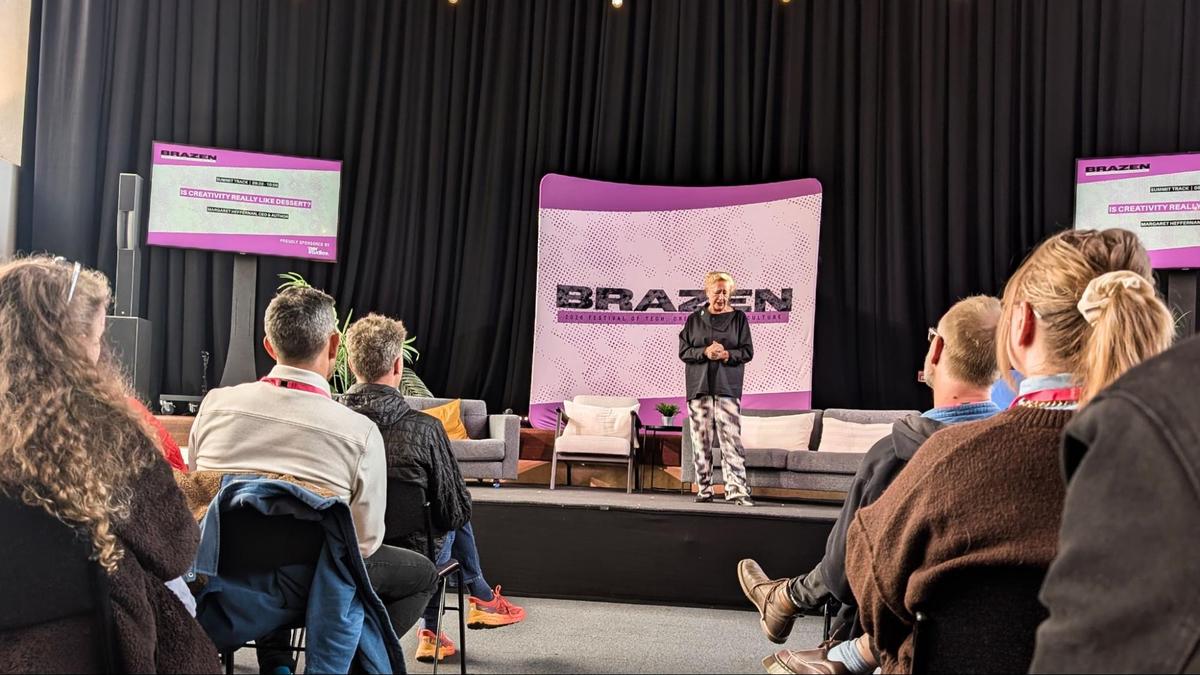
Margaret Heffernan delivered an inspiring keynote speech on human creativity, patience and courage. Beatie Wolfe, Robin Thorn and David Sheppard talked about Spatial audio and how it has impacted the music industry. Ottilie Culloty of Celestial and Graham MacVoy of Wake the Tiger talked about immersive experiences by drawing examples from their drone show and immersive art park businesses. And finally, Nick Eagleton, Andy Boreham and Rosa ter Kuile talked about their creative journey on rebranding the Colston Hall into what is now Bristol Beacon.
On the community track, Amy Gettings and Hamish McWhirter of “Hey! What?” talked about how weird designs work by standing out. They talked about Angine de Poitrine and how their "weird" brand is striking a chord with music fans!
Lucy Collins and Matt Roberts had an interesting panel on accessibility where they took audience input on creating an accessibility manifesto.
I didn't end the day suddenly becoming an artist and of course that was never expected. But I learned a lot. One of the 10-minute talks, delivered by Jo Vaughan, was on "The Art of Simplicity" which I felt like was almost the opposite of "Why weird works?" and "The Age of Average". And I think that's important. There's no 1 right answer! We are different and diverse humans with different ideas and tastes and that's what separates us from AI. That's why we struggle to figure out life and that's what makes it interesting.
And that's Brazen
I found this experience to be very valuable to me. I got to meet a lot of people from different walks of life, I got to hear a lot of good talks from a lot of interesting people.
I talked to 18 people.
This might sound funny, but I had a goal of talking to 5 people, and I’m actually very proud of myself!
I learned how important accessibility is to the people of the UK.
As a company, accessibility has always been of utmost importance at 3 Sided Cube, but I never knew that this was a country-wide concern. It was really interesting to see how people cared about each other and their community.
At the BID event, one of the winning designs proposed floating saunas next to a harbour, some steps where people could sit on in the sun and a greenhouse. I was looking at this thinking, “Wow! I can’t believe that this is being talked about right now!” and while I was thinking that, a woman in the audience asked, “The designs show steps and might not be very accessible. How can people with wheelchairs get to the saunas?” I just couldn’t believe my ears! It was incredible to me that the first concern of the citizens when they saw this design was accessibility.
At the Tech4Good South West event, the whole topic was the connection project and how we can make sure all people get the right access to digital services.
There was a talk about how we can recycle our unused devices to close the device gap, making sure a lot more people can have access to the devices that they need.
And on the final day, there was a whole panel on accessible designs.
I come from a very different background and environment, and all of this sounded alien to me! Where I come from, the focus of the country and the government has always been exclusivity and separation!
I gained a lot of perspective.
I learned that as a company, we’re very far along in terms of AI usage, and I was proud of that. But, seeing other companies, it still felt like we should be much further along. Everything is moving fast, and there’s no time to take a break. Constant pressure and demand and competition!
Everybody else is also in the “No one knows what’s going to happen” boat.
My suspicion was confirmed: It is no longer enough to just be good at one thing.
Skills that are easily replicable are no longer enough. We need to produce more than simple competent outputs.
It's no longer a question whether or not we can do something. It's now "We can do anything! What should we do?"
I went to Bristol because I felt I'd been one thing for too long. In one week I talked to 18 strangers, sat in on a BID meeting, and spent a whole day on art. None of it was about Android or React Native, and that was exactly the point. Being good at one thing isn't enough anymore. Everything is changing, the future is uncertain, and it turns out nobody has it fully figured out. We're all just learning to be a bit more than we were.
Published on 24 November 2026, last updated on 24 November 2026